In today's digital-first world, convenience often comes at the cost of privacy. From online banking and mortgage applications to cloud storage and document sharing, sensitive information moves across countless digital platforms every day. While many organizations claim to protect user data, a critical question remains:
Who can actually see your information?
The answer depends largely on the security architecture behind the platform. One of the most powerful privacy technologies available today is Zero-Knowledge Encryption—a security model designed to ensure that only the user can access their data.
For industries like FinTech, mortgage lending, legal services, and document management, where trust and confidentiality are paramount, zero-knowledge encryption is rapidly becoming the gold standard for protecting sensitive information within a Secure Digital Vault and modern Document Security Platform.
What Is Zero-Knowledge Encryption?
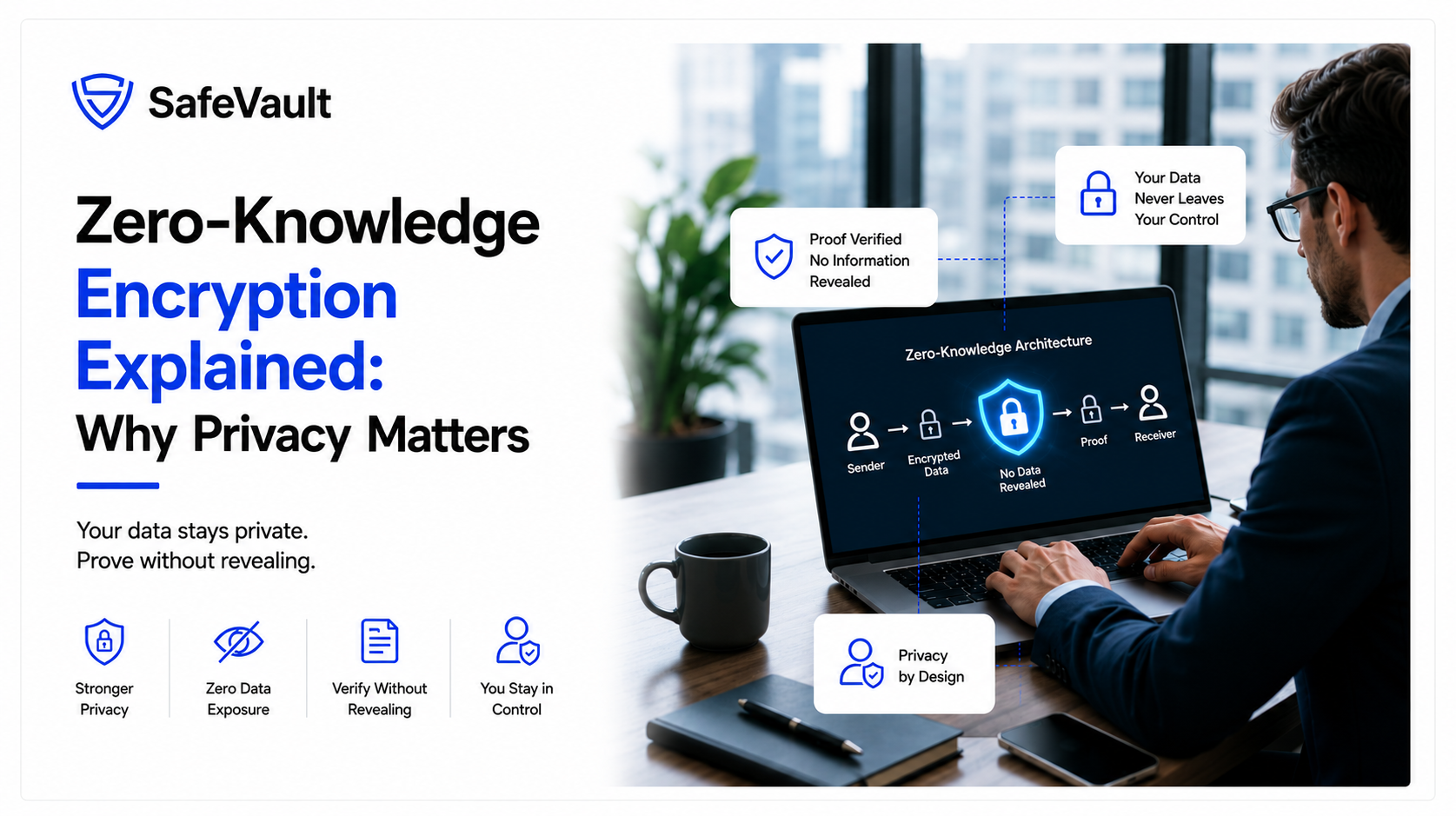
Zero-knowledge encryption is a security model in which a service provider stores and manages your encrypted data but has absolutely no ability to view, access, or decrypt it.
In simple terms:
Your data is encrypted before it leaves your device.
Only you possess the encryption key.
The service provider cannot read your files, passwords, or personal information.
Even if the provider's servers are compromised, attackers cannot access the actual contents of your data.
This approach is often referred to as a "privacy-first" architecture because the platform itself has zero knowledge of what you store. As organizations seek stronger protection for sensitive records, zero-knowledge encryption has become a critical feature of every advanced Data Protection Platform.
Traditional Encryption vs. Zero-Knowledge Encryption
Many cloud services advertise encryption, but not all encryption methods provide the same level of privacy.
Traditional Encryption
With standard cloud storage solutions:
Data is encrypted during transmission.
Data is encrypted while stored on servers.
The provider often controls the encryption keys.
This means the provider may technically be able to access your information when necessary.
Zero-Knowledge Encryption
With zero-knowledge encryption:
Data is encrypted on your device.
Encryption keys never leave your control.
The provider cannot access your files under any circumstances.
This distinction may seem subtle, but it dramatically changes the privacy equation. Unlike conventional storage solutions, a Secure Cloud Vault built on zero-knowledge architecture ensures that users remain the sole owners of their information.
Why Privacy Matters More Than Ever
Data breaches have become a routine headline.
Financial institutions, healthcare providers, retailers, and technology companies have all experienced cyberattacks exposing millions of customer records.
For consumers, the consequences can include:
Identity theft
Financial fraud
Account takeovers
Credit damage
Privacy violations
For businesses, the stakes are even higher:
Regulatory penalties
Legal liability
Customer distrust
Reputation damage
Operational disruption
As digital ecosystems continue to expand, protecting information at the highest possible level is no longer optional. Organizations are increasingly turning to Cyber Secure Document Storage solutions that provide both accessibility and uncompromising privacy.
The Growing Importance in FinTech
The FinTech industry processes enormous amounts of sensitive information every day.
Examples include:
Bank statements
Tax documents
Income verification records
Credit reports
Investment portfolios
Social Security information
Consumers increasingly expect financial platforms to provide not only convenience but also robust privacy protections.
A zero-knowledge architecture helps address one of the most common customer concerns:
"Can anyone else see my financial information?"
With zero-knowledge encryption, the answer is simple:
No—not even the platform provider.
This level of protection helps build trust while reducing the risk associated with storing financial documents online. For FinTech organizations, implementing Encrypted Document Storage within a secure environment creates a competitive advantage while strengthening customer confidence.
Why Mortgage Professionals Should Pay Attention
Mortgage transactions involve some of the most sensitive documents consumers will ever share.
A typical mortgage file may contain:
Tax returns
W-2 forms
Pay stubs
Bank statements
Credit reports
Property records
Government-issued identification
Throughout the loan process, these documents often move between borrowers, lenders, processors, underwriters, and third-party service providers.
Every transfer introduces potential security risks.
Without strong privacy controls, sensitive borrower information can become vulnerable to unauthorized access, accidental exposure, or cyberattacks.
Zero-knowledge encryption creates an additional layer of protection by ensuring that stored documents remain inaccessible to anyone without proper authorization. A dedicated Document Security Platform can protect mortgage records while enabling efficient workflows and secure collaboration.
Why Every Business Needs a Secure Digital Vault
Businesses today manage a growing volume of confidential information. From contracts and employee records to financial reports and customer documentation, organizations need more than traditional file storage.
A modern Secure Digital Vault acts as a centralized repository where critical documents can be stored, managed, and protected. Unlike basic storage systems, an Enterprise Data Vault combines encryption, access controls, auditing, and compliance features to safeguard valuable information.
For industries where privacy is essential, a Secure Digital Vault provides the foundation for long-term data protection and operational resilience.
Secure File Sharing for Business
Sharing sensitive documents remains one of the biggest cybersecurity challenges organizations face.
Many businesses still rely on email attachments or consumer-grade file-sharing tools to exchange confidential information. Unfortunately, these methods often expose organizations to unnecessary risk.
Modern platforms offering Secure File Sharing for Business allow teams to:
Share documents safely
Set expiration dates on shared files
Restrict unauthorized access
Track document activity
Maintain complete audit trails
By combining secure sharing capabilities with zero-knowledge encryption, organizations can collaborate confidently without sacrificing privacy.
Compliance Document Storage for Financial and Legal Organizations
Regulatory compliance is a top priority for financial institutions, mortgage lenders, and law firms.
Organizations must comply with strict requirements related to:
Data privacy
Consumer protection
Information security
Record retention
Audit readiness
This is where Compliance Document Storage becomes essential.
A secure system helps organizations manage sensitive records while supporting regulatory obligations. Law firms, in particular, benefit from a dedicated Legal Document Vault that protects confidential client information while enabling controlled access and collaboration.
By integrating zero-knowledge encryption into compliance strategies, businesses can significantly reduce exposure risks and strengthen governance practices.
How Zero-Knowledge Encryption Protects Against Data Breaches
One of the greatest advantages of zero-knowledge encryption is its ability to limit damage during a breach.
Imagine two scenarios:
Scenario 1: Traditional Storage
A cybercriminal gains access to a cloud provider's systems.
Because the provider controls the encryption keys, attackers may potentially access customer information if security controls fail.
Scenario 2: Zero-Knowledge Storage
A cybercriminal gains access to stored files.
However, the files remain encrypted and unreadable because only the user possesses the decryption key.
The attacker sees encrypted data—but not the actual content.
This dramatically reduces the value of stolen information and strengthens overall security. This is why many organizations are transitioning to Encrypted Document Storage and Cyber Secure Document Storage solutions built around privacy-first principles.
Building Customer Trust Through Privacy
Trust is one of the most valuable assets in financial services.
Consumers are increasingly aware of cybersecurity risks and are becoming more selective about where they store sensitive information.
Organizations that prioritize privacy gain a competitive advantage by demonstrating that customer protection is more than just a marketing claim.
When customers understand that:
Their data is encrypted
Their documents remain private
Even the provider cannot access their information
they are more likely to feel confident using a Secure Cloud Vault or Document Security Platform for important financial activities.
The Future of Secure Document Management
As digital transformation accelerates, document security is evolving beyond basic storage.
Modern platforms are integrating:
Artificial intelligence
Workflow automation
Secure sharing
Smart document organization
Identity verification
However, innovation must never come at the expense of privacy.
The future belongs to solutions that combine intelligent functionality with uncompromising security. Whether it's an Enterprise Data Vault, Secure Digital Vault, Legal Document Vault, or a comprehensive Data Protection Platform, privacy will remain a defining feature of trusted digital solutions.
Final Thoughts
In an era where personal and financial information is constantly moving through digital channels, privacy has become one of the most important features any platform can offer.
Zero-knowledge encryption represents a significant step forward in protecting sensitive data because it eliminates one of the biggest risks in cloud computing: provider access to customer information.
For FinTech companies, mortgage lenders, legal organizations, and businesses seeking a reliable Document Security Platform, adopting privacy-first security models is no longer simply a technical decision—it is a business imperative.
As consumers demand greater transparency and stronger protection, organizations that embrace Secure Digital Vaults, Encrypted Document Storage, Secure File Sharing for Business, Compliance Document Storage, and advanced Data Protection Platforms will be better positioned to earn trust, strengthen security, and build long-term customer relationships.
Because when it comes to sensitive financial documents, the safest information is information that only you can access.