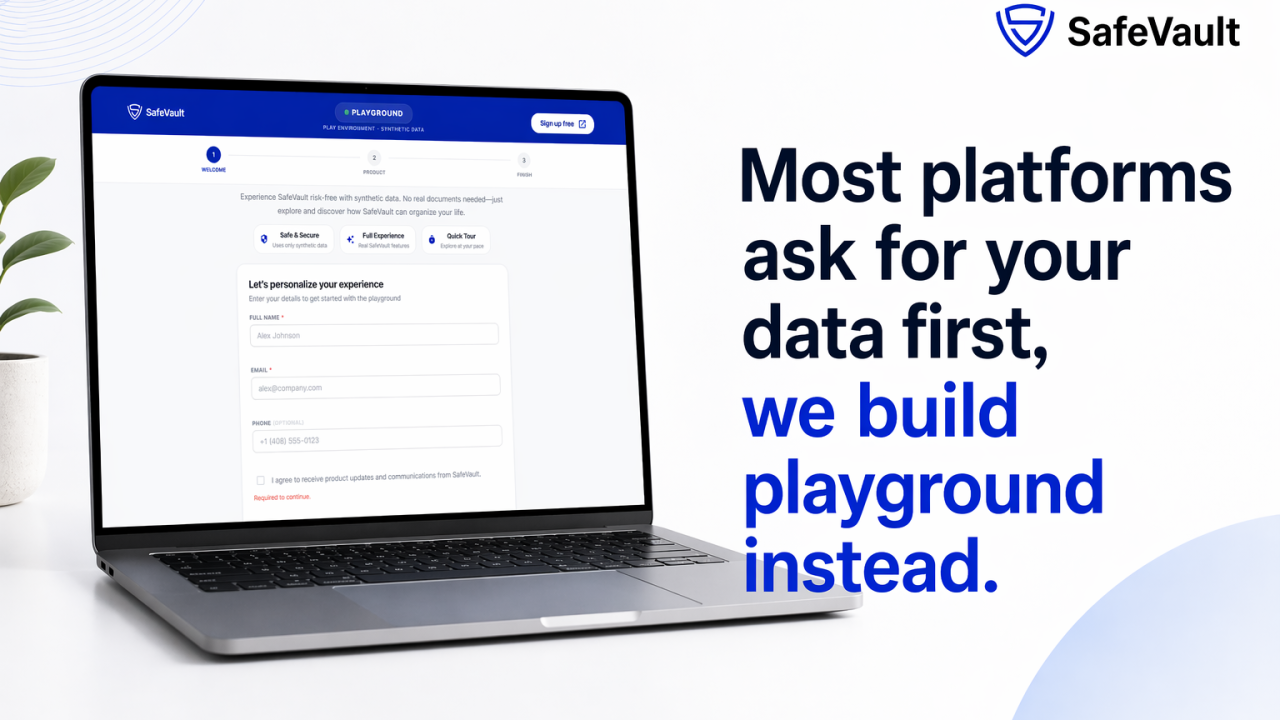
When people first explore a document platform, the hesitation is real.
They may be interested in the product. They may want to understand the workflow. They may even see the value quickly. But that does not always mean they are ready to upload real personal, financial, or sensitive documents on day one.
And honestly, they should not have to.
Too many platforms ask users to cross the trust barrier before they have had a chance to understand the experience. The first interaction becomes a commitment request: upload your files, connect your information, and start using the system before you are fully comfortable with what comes next.
That approach may be common, but it is not always the best way to introduce a product built around important information.
At SafeVault, we believe people should be able to understand the workflow before they hand over sensitive data.
That is why we built SafeVault Playground.
Instead of asking you to begin with real documents, Playground gives you a way to explore the experience with sample data. It is a simpler, safer entry point for people who want to see how the product works before bringing anything personal into the process.
That difference matters more than it may seem.
Because in document-heavy workflows, trust is not a side issue. It is the starting point.
Whether someone is organizing important personal records, exploring a more modern document experience, or evaluating how a platform handles structure and visibility, the first question is often not “What features does it have?” The first question is: Do I feel comfortable starting here?
Playground was built to answer that question in a more practical way.
Not through a long explanation. Not through a static screenshot. Not through a sales conversation alone. But through experience.
You can click through the flow, understand how the product is organized, and get a feel for what SafeVault is designed to do — all without the pressure of using real files too early.
That is important because products like this should not rely only on persuasion. They should be understandable through interaction.
If the workflow is clear, people should be able to see that. If the experience is thoughtfully designed, people should be able to feel that. And if trust matters, the first step should reduce hesitation, not increase it.
This way of thinking is also aligned with a larger shift in digital product design. Official privacy guidance increasingly emphasizes building trust and data protection into the product experience from the start, rather than treating privacy as something added later. The same is true of modern digital identity guidance, which continues to frame security, privacy, and customer experience as connected, not competing priorities.
That is part of why Playground matters.
It is not just a demo environment. It is not just a marketing asset. It is a product decision.
It reflects a simple belief: people should be able to explore before they expose.
In a category where many products still begin by asking for real information immediately, we wanted to create a different kind of first step — one that feels lower-pressure, more transparent, and more respectful of how trust is actually built.
That is also why interactive product experiences have become more important across modern software. Self-guided, clickable demos let people explore at their own pace without needing access to a live environment, and they give buyers a more hands-on way to understand what matters to them.
For SafeVault, that idea felt especially relevant.
When the product touches sensitive documents, the first interaction should not feel like a risk. It should feel like clarity.
So instead of asking for your data first, we built Playground instead.
If you have been curious about SafeVault but have not been ready to start with real files, this is the right place to begin.
Explore the experience, understand the workflow, and see what SafeVault feels like before anything sensitive ever enters the picture.
Start with SafeVault Playground Learn more about SafeVault
For a broader view of why privacy-first product design matters, the UK ICO’s guidance on data protection by design is a useful reference, and NIST’s latest Digital Identity Guidelines are also worth reading for teams thinking seriously about trust, privacy, and user experience in digital systems.